AI Coding Agents in Slack-Based Engineering Workflows
Shared channels make AI coding agents visible.
A developer tags Claude Code, works in a private terminal for an afternoon, and ships a pull request. Nobody else saw what the agent tried. Nobody saw what it rejected, reversed, or reasoned through. The team gets a diff and a prayer.
That's the dominant model for AI-assisted coding today. 39% of professional developers use Claude Code at work, and nearly all of them work alone. The finished diff lands in review, but the agent's intermediate decisions are already gone. Reviewers can't judge whether the output is trustworthy, because they can't see the path that produced it.
This isn't a documentation gap. It's a structural blind spot. Without a trace of agent behavior, reviewers have no way to know whether the agent stayed within safe boundaries or wandered somewhere it shouldn't have. The problem compounds as agents take on longer, more consequential tasks. Less visibility means more risk accumulating silently.
Invisibility is the core failure here, not model quality or task scope. A brilliant model working unobserved is still unobservable. And unobservable work doesn't get reviewed, steered, or trusted. It gets accepted or rejected on trust alone.
What Slack Code actually does inside a code channel
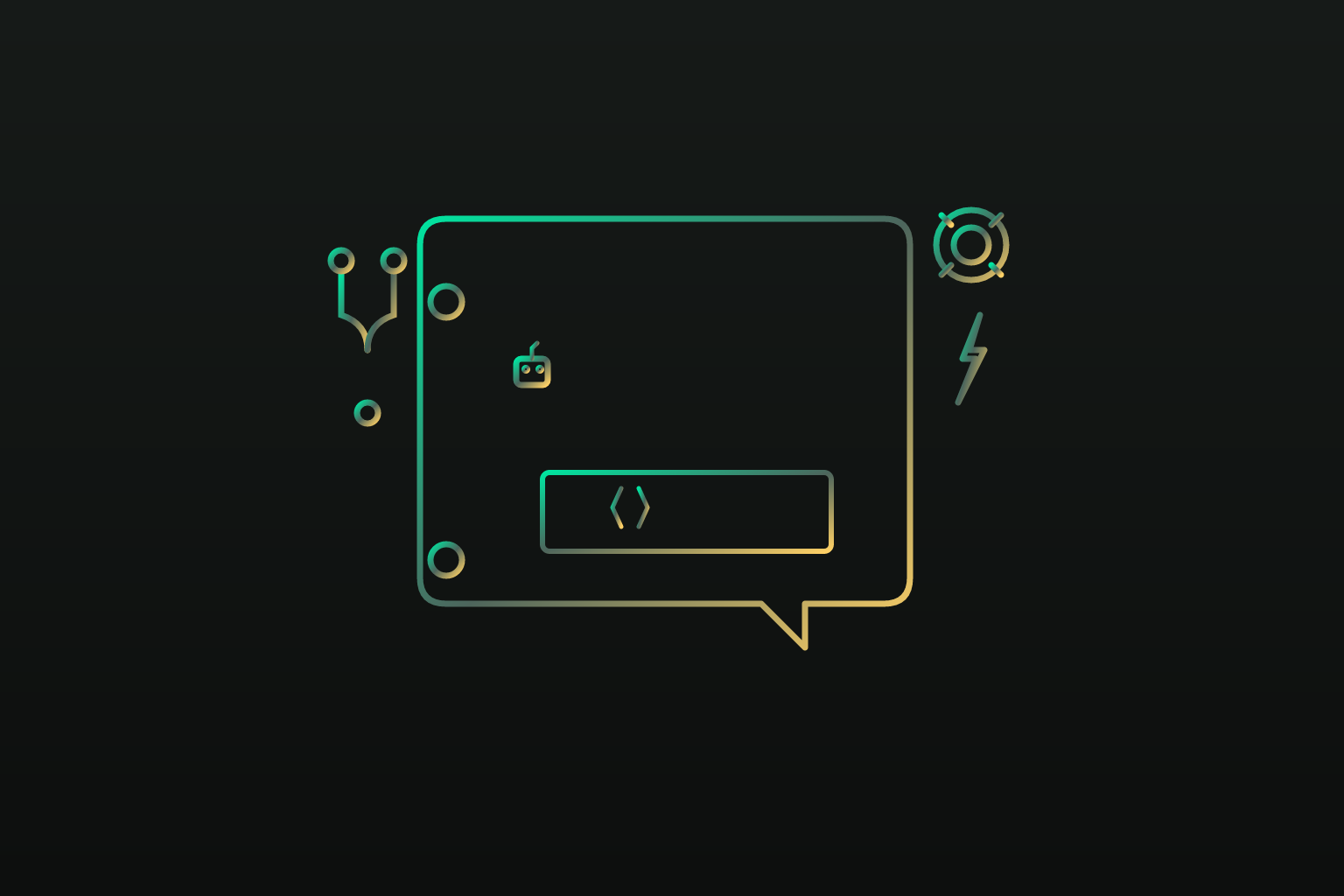
Salesforce's Slack Code announcement describes a shift in the unit of work. The channel, not the chat window, is now where agent work happens. The mechanics are simple. If you tag a coding agent in any Slack conversation, a project-scoped code channel gets provisioned automatically. The agent works inside it from the start. That channel has four tabs: conversation, the agent's plan, line-by-line code diffs, and a live preview of running output. The whole team watches the agent build in real time, not after the fact.
Human sign-off still gates the scary parts. Merging code to production requires explicit approval from an expert inside the channel. Anyone in the channel can pause, redirect, or stop the agent mid-task. When the work completes, the channel archives itself and preserves a searchable audit log: who asked for what, what the agent changed, who approved it.
There's a quiet infrastructure win too. Agents inherit Slack's existing enterprise security model and admin permissions. No new identities for IT to provision. No separate approval bottleneck. The platform layer doesn't multiply.
None of this is editorializing. It's just what the product does. The argument about what this visibility actually accomplishes comes next.
How shared channels make agent behavior observable — and why that is different from audit logs
An audit log is a record of what happened. A live code channel is a surface where the team participates in what's happening. That distinction matters for risk management and for learning.
When agent work is visible in real time, a second developer, a product manager, or a designer can catch a misunderstanding at the plan stage. Not after the agent has written several hundred lines. The diff view and live preview tabs make that possible. You don't read about the drift after it lands. You watch it happen and say something. Rob Seaman, Interim CEO of Slack, puts it plainly: "AI only creates value when it's part of how a team actually works, not something people go do alone in another tab. Code channels bring that work into the open, where the rest of the team can see it, shape it, and build on it."
There's a social mechanic underneath the technical one. When agent work is visible, peers notice it. They ask questions about it. The pattern propagates. It's the same dynamic that made Slack itself spread inside organizations. Visibility is contagious.
So here's the sharper question. Does visible work actually get reviewed rigorously? A channel full of people watching a diff scroll by is not the same as a channel full of people evaluating it.
The approval step is a control point, not a governance framework
Requiring human sign-off before production merges is the right instinct. But a thumbs-up in a busy channel is not a code review. The channel-as-governance model has structural limits that teams need to understand before they scale delegation.
Social pressure in a visible channel can accelerate approval as easily as it improves scrutiny. A diff that looks fine to a product manager may carry architectural risk that only a senior engineer would catch. Visibility doesn't confer expertise. It just moves the approval moment out in the open where everyone can nod along.
There are concrete limits too. Slack provides audit logs only for Enterprise-tier licenses. Organizations on Business+ or lower don't have the same audit infrastructure, even though Slack Code itself is available on all plans. The governance model thins out for a meaningful portion of Slack's user base.
Mitiga's April 2026 demonstration showed how the channel's social trust becomes an attack surface. Once an agent is abused, the campaign fully inherits the trust, tone, and reach of the user's Slack account. Malicious payloads spread organization-wide in minutes across channels and DMs from a familiar sender. The same visibility that helps peers steer work also helps bad actors reach them.
The strongest defense is that any visibility beats none, and the approval requirement at least guarantees a human moment before production. True. But the quality of that moment depends on who is in the channel and what they're equipped to evaluate. That's the question to carry forward: what makes that approval moment substantive rather than performative?
What the security record of AI-assisted code says about the stakes of getting oversight right
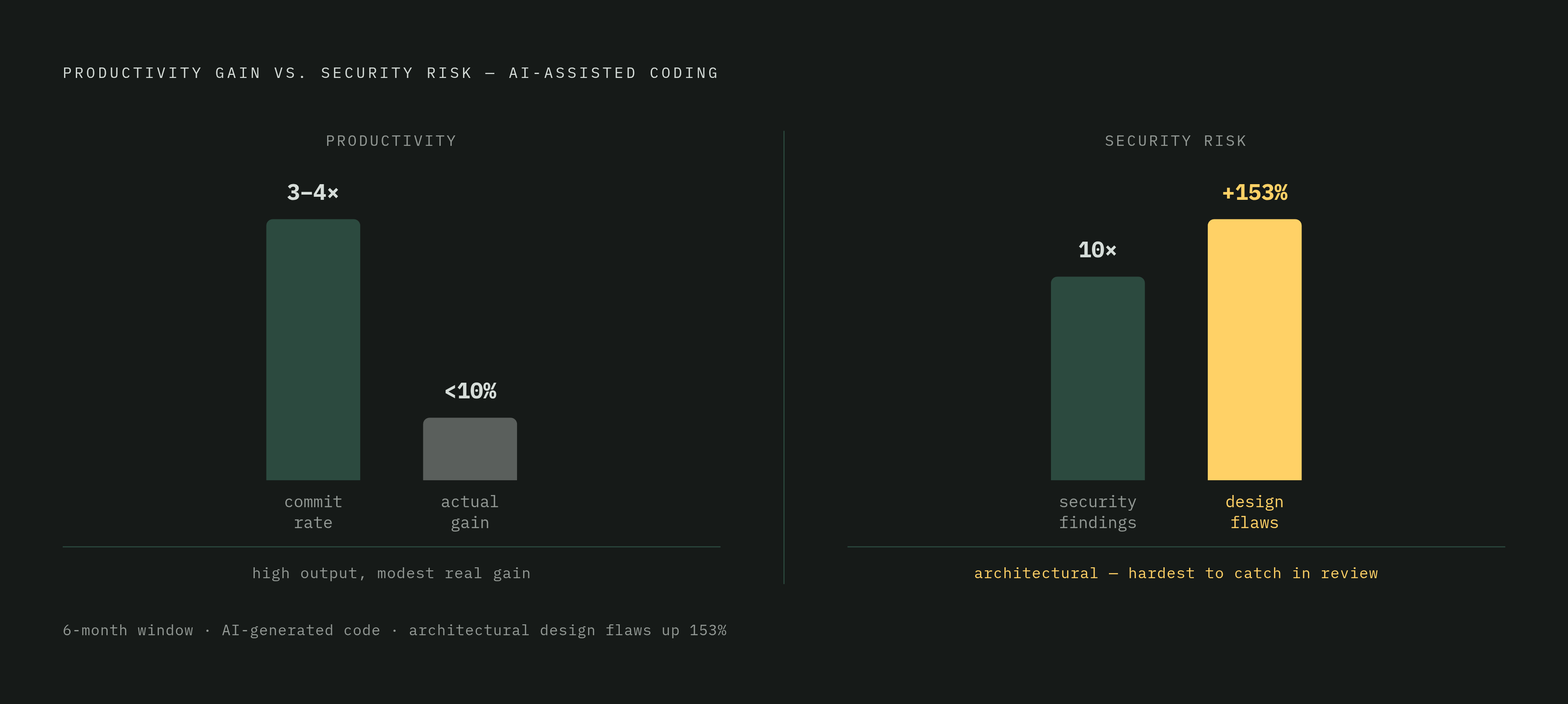
The volume of AI-generated code has outpaced organizations' capacity to secure it. The flaws that are increasing are architectural ones. Surface-level diff review is least likely to catch them.
The CSA's research note on Apiiro's deployment across Fortune 50 enterprise repositories found that monthly security findings surged by roughly tenfold over six months when AI-assisted developers committed code at three to four times the rate of non-AI peers. Privilege escalation paths and architectural design flaws led the increase. Architectural design flaws alone rose by 153% in AI-generated code.
Those are precisely the flaw types a channel-based review is least equipped to catch. They require understanding the system's full architecture, not just the lines changed in a diff. You can watch an agent work in real time and still miss that it wired a privilege escalation across three services.
The implication is not that Slack Code makes things worse. It's that shared channels need to be designed as one layer in a stack that includes static analysis, policy enforcement, and role-based review. The channel is not the stack itself. Treating it that way would be like treating a dashboard as the engine.
The productivity gap tells the same story from the other side. Productivity gains from AI coding assistants have not budged past 10%, even though over a quarter of production code is AI-written. More code is landing. Scrutiny isn't keeping up. Teams that ignore the governance gap are betting on luck.
How non-engineers entering the workflow changes who bears review responsibility
Slack Code's most consequential design choice is that non-technical teammates can trigger agents and approve output. That eliminates engineering bottlenecks for routine tasks. It also creates new questions about who is qualified to sign off on what.
Rob Seaman's stated position is that "code is no longer the bottleneck." The real constraints, he argues, are now ideas, taste, judgment, and craft. Non-engineers possess those as much as engineers do. Slack's own launch example shows a product manager spotting a bug report, tagging an agent, and getting a fix reviewed and merged without an engineer picking it up. That's the intended use case, not an edge case.
Jeff Wang, President of New Enterprise at Cognition, describes Devin responding in Slack autonomously, verifying its work end-to-end in cloud agents, and bringing the right people together. The agent surfaces the right reviewer, he says. It doesn't replace the review. Roughly 89% of all code committed at Cognition is now written by Devin, which makes that distinction load-bearing.
Malte Ubl, CTO at Vercel, frames it as "building software from something that happens in one person's local session into something the whole team does together." The framing is accurate but leaves open what "together" means for accountability. A group watching is not a group responsible.
The tension is real. The same democratization that removes bottlenecks means the person approving a merge may not understand its security or architectural implications. Teams that deploy Slack Code successfully will need explicit norms: which categories of change require engineer review, which can be approved by any channel member. The channel surfaces the work. It does not automatically route it to the right reviewer.
Why organizational adoption follows social diffusion, not feature announcements
The deeper design question for Slack Code is not feature coverage. It's whether the channel-native workflow becomes visible enough to peers that it spreads on its own. Evidence from large-scale agent rollouts suggests mandate-driven adoption fails where social diffusion succeeds.
Microsoft's early-2026 rollout study found that first use spread primarily through social networks. An engineer's peers and managers using the tool drove adoption, not top-down directives alone. The paper notes manager usage could partly reflect implicit organizational direction, but the pattern holds: adopters merged roughly 24% more pull requests, and the gain held steady across the study window.
The channel mechanic is well-suited to social diffusion precisely because the work is visible. An engineer watching a colleague's agent session in a shared channel is exposed to the workflow passively. No demo required. No training session. The work itself is the advertisement.
Microsoft's own enterprise trajectory shows the procurement dimension. After urging thousands of in-house engineers to use Claude Code, Microsoft reportedly canceled most internal Claude Code licenses in its Experiences and Devices division by June 30, 2026, redirecting those teams to GitHub Copilot CLI. Enterprise agent adoption is governed as much by procurement strategy and platform consolidation as by user preference or performance. Shashi Bellamkonda, principal research director at Info-Tech Research Group, notes that Slack Code will need developers to move away from their current platform of choice. "That is a question that is difficult to answer," he says, "and will need a lot of work with persuasion."
Slack's incumbency advantage is real though. The conversations that precede the code already happen in Slack. The shared context exists before a code channel opens. That's structurally different from asking teams to adopt a new tool from scratch. The workflow isn't new. It's just where the work becomes visible.
What model-agnostic, open infrastructure adds to the channel visibility argument
The visibility Slack Code creates inside channels is only as trustworthy as the agents and infrastructure running beneath it. That makes the choice of open, model-agnostic agent platforms a governance question, not just a technical one. The model-agnostic stance contrasts directly with the Microsoft/GitHub strategy of consolidating around a single stack. The Microsoft rollout-and-reversal case shows why vendor lock-in creates organizational risk even when individual performance is strong. A tool that works well today can be redirected tomorrow by a procurement decision.
Open-source agent platforms extend the neutrality principle beyond the channel layer. Teams can deploy agents in their own infrastructure, inspect and audit behavior directly, and swap the underlying model without renegotiating a vendor relationship. The governance advantage compounds: when the agent platform is open and self-hosted, the audit trail Slack Code preserves in the channel is backed by full agent-side logs the organization controls. No dependency on a vendor's log retention policy or tier gating. Platforms like OpenHands run agents continuously within an organization's own infrastructure and maintain detailed audit logs of every action. That offers a complementary model: agents execute with full traceability, so the team can observe behavior both in real time and retroactively, and enforce controls at the infrastructure level rather than relying solely on channel-level visibility.
One study adds a cautionary note. Experienced open-source developers were 19% slower with AI tools in a randomized controlled trial. Infrastructure control doesn't guarantee productivity. It guarantees a cleaner audit trail and an escape hatch if the vendor relationship shifts.
Slack Code's API will open to custom enterprise agents and non-engineering functions like legal and marketing. The channel visibility model eventually extends beyond software development, and the infrastructure question scales with it. Choosing open agent platforms early is a hedge against tomorrow's vendor decisions.
What teams should decide before they delegate to an agent in a shared channel
Shared channels make agent behavior observable. Observation converts to trust and safe delegation only when teams have made explicit decisions about what agents are authorized to do, who is qualified to approve each category of change, and what to do when an agent acts unexpectedly. Define scope before the channel opens. Which tasks are appropriate for agent delegation? Routine bug fixes, page updates, test generation all qualify. Architecturally significant work needs engineer-led execution. The Mercedes-Benz COBOL migration case shows the pattern: hundreds of thousands of lines analyzed, with timeline compression from eight months to eight days. The strongest use cases are high-volume, bounded, well-specified tasks that don't require real-time architectural judgment.
Establish reviewer roles explicitly. Specify which channel members can approve production merges versus comment on direction. The social approval dynamic in a busy channel is not a substitute for designated accountability. Someone has to own the merge. Treat the audit log as a learning artifact, not just a compliance record. The searchable history of what was asked, what the agent changed, and who approved it is how teams build institutional knowledge about where agents succeed and where they need more direction.
Layer channel visibility with complementary controls. Static analysis, policy enforcement, and role-based access sit outside the channel but protect what the channel cannot see: architectural risk, privilege escalation, cross-repository side effects. The channel is a layer, not the stack.
Choose agent infrastructure that matches the organization's audit and control requirements. Enterprise-tier Slack for full audit logs. Open-source agent platforms for full infrastructure ownership. The decision should precede delegation at scale, not follow an incident. Channel visibility is the prerequisite, not the guarantee. Teams that treat it as a starting point rather than a destination are the ones that will build durable trust in agent workflows.