AI Agent Evaluation Frameworks Compared
Choosing an evaluation framework depends on visibility depth, licensing, and infrastructure control.
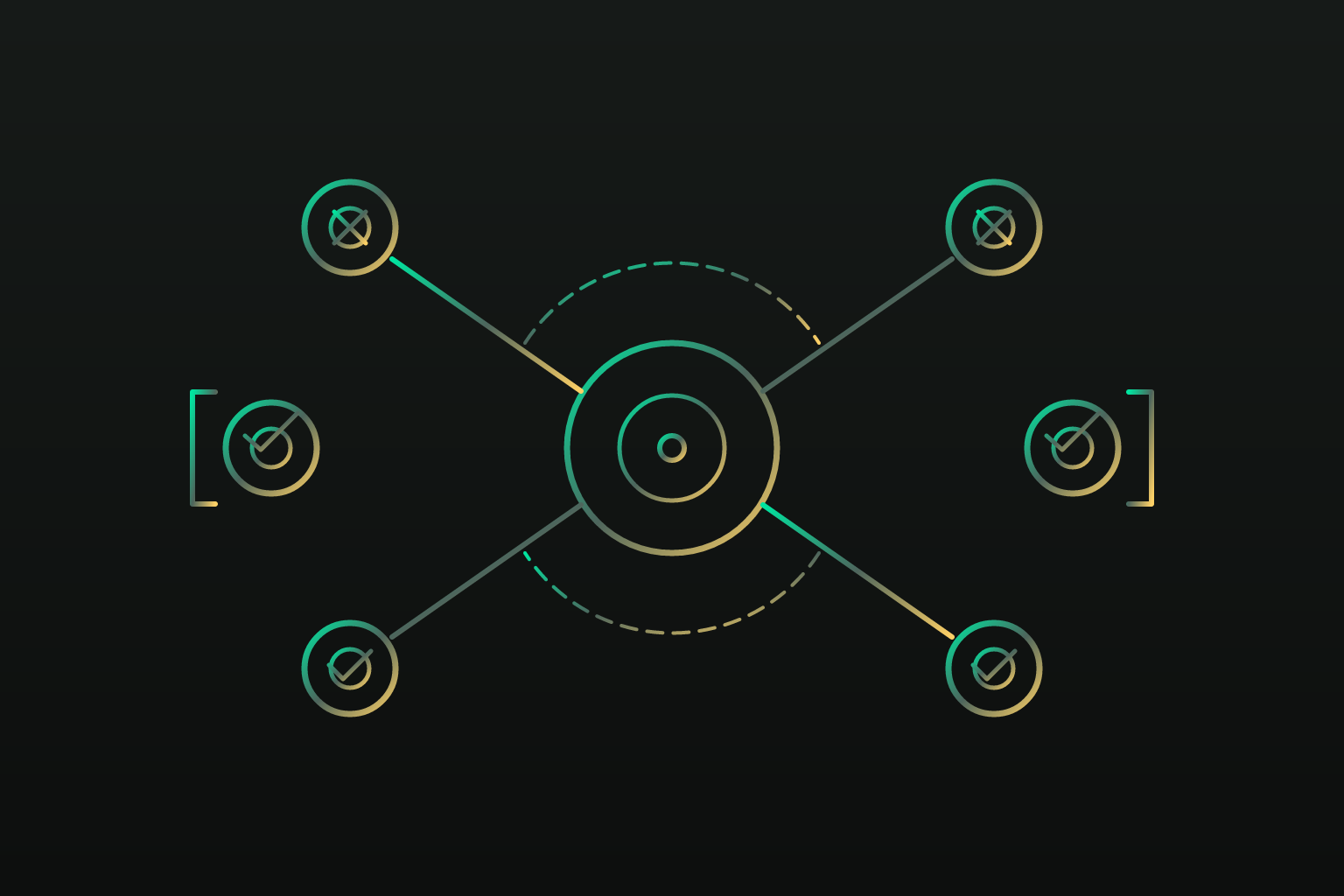
AI agent evaluation frameworks differ most in what they can see between a request and its answer. The right choice covers where your agent actually fails, including the quality of its final message. OpenHands is a strong fit when infrastructure control and model choice matter, while other frameworks suit narrower evaluation needs. With any of these frameworks, teams still need both offline regression tests and per-turn production monitoring.
Why final-output scoring fails agents and what evaluation must cover instead
A correct answer can hide wrong tool calls, policy violations, loops, and errors that cascade through later steps. Outcome-only scoring marks the result green while missing the route that produced it. That is rather like passing a driving test because the car got to the parking space in the end. Even a high per-step pass rate can compound into poor task completion over a long execution.
Evaluation therefore needs three layers, each answering a different question. Final-answer evaluation checks the last message against the expected result. Trajectory evaluation checks the model calls, tool calls, and arguments in the order they occur. Per-turn evaluation checks the meaning of each turn for jailbreaks, policy drift, and user frustration that traces alone do not diagnose. None of these layers substitutes for the others.
The five axes that actually determine which framework fits
Start the decision checklist by checking the license for rights to self-host, audit, and modify evaluation logic. Fully open-source, source-available, and closed platforms offer different rights, even when their interfaces look similar. Next check offline versus online coverage. Offline evaluation catches regressions on fixed datasets, while online evaluation catches drift and failures in live traffic.
Then check trajectory depth, including tool arguments, loop counts, and plan adherence as well as the quality of the output. Check LLM-as-judge support for model flexibility and reliability. Finally, check integration overhead, especially whether the runtime supplies native trajectory semantics or requires manual wiring of OpenTelemetry spans. An architecture-specific SDK, such as OpenHands's model-agnostic SDK, can reduce that instrumentation work. Safety scoring and cost attribution need their own check because the five axes do not show whether coverage is compliance-ready.
OpenHands: open-source agent platform with model-agnostic evaluation flexibility
OpenHands is an open-source platform for AI coding agents that organizations deploy, control, and scale on their own infrastructure. Teams can audit or extend the codebase and choose which models power both the agent and its evaluation judge. That keeps the scoring layer from becoming another vendor dependency.
The platform runs agents continuously with built-in observability and logs intermediate steps and tool calls by default. Those records give teams visibility into the complete execution trajectory without retrofitting traces onto a generic runtime. They also provide the basis for offline CI validation and scoring against live production traces. Both can run without routing evaluation data through a third-party cloud.
Teams can deploy in on-premises and air-gapped environments, where the infrastructure they need can decide what they buy before they even discuss metric depth. This makes OpenHands a strong fit for teams that need to understand execution before scaling automation and retain control of their evaluation data. Its advantage is the combination of agent runtime, native visibility, and model choice. That provides infrastructure for evaluation, with observability requiring additional scoring support.
MLflow: open-source platform with trace-aware scoring across the full reasoning loop
MLflow is an open-source starting point for evaluation throughout the agent development loop. Its mlflow.genai.evaluate() API takes in the whole execution trace, including tool calls, reasoning chains, and planning decisions. Agent GPA (Goal-Plan-Action) scorers cover common patterns, while custom Python scorers check criteria that are specific to a domain. Native integrations and plugin scorers support work across multiple frameworks.
GEPA and MemAlign optimize judge prompts against human labels so scores better reflect reviewer assessments. Multi-turn and conversation-level evaluation, trace timelines, and per-turn score breakdowns help teams inspect failures without excavating raw JSON. Production traces can also become evaluation datasets.
DeepEval: agent and RAG evaluation with span-level scoring and CI/CD integration
DeepEval puts individual decisions under the microscope. It scores tool calls, reasoning steps, and retrieval choices at span level, with agent-specific metrics. Its execution-tree graphs help teams see how one failure spreads through later decisions. Coverage also spans safety, multimodal inputs, and multi-turn chatbots.
The framework is open-source and offline-first, with CI/CD integration for detecting wrong tool selection, degraded planning, and broken reasoning before release. Teams that use Python have low integration overhead and get native agent tracing, plus LLM-as-judge support that comes with a judge model. Voice conversations, image inputs, tool calls, and external API interactions are supported, but single-turn and multi-turn datasets require separate evaluation runs. DeepEval is a practical fit when complex tool chains need precise diagnostics in the same pipeline as code tests. Coding agents can also use it as a harness to inspect failures, make changes, and verify results.
LangSmith: lowest-friction trajectory evaluation when the runtime is LangGraph
LangSmith's fit depends heavily on the runtime. For LangGraph agents, AgentEvals provides trajectory matching through create_trajectory_match_evaluator, with strict, unordered, subset, and superset modes. OpenEvals supplies LLM-as-judge support. Prompts, datasets, deployment, Fleet workflows, and Studio share one surface, with dataset versioning, threaded comments, and a hosted human review queue.
That integration supports both offline and online evaluation with little context switching for LangChain teams. However, the platform is closed even though the SDK and AgentEvals helpers are MIT-licensed, and self-hosting requires an Enterprise contract. Non-LangChain agents lose the native trajectory semantics and depend on generic span ingest, raising integration work. Per-seat pricing can also make broad cross-functional access expensive. LangSmith therefore fits existing LangGraph executions much better than teams hoping its native semantics will transfer to an unrelated runtime.
Arize Phoenix: open trace visualization with trajectory and path-convergence scoring
Arize Phoenix starts from trace capture and visualization, with trajectory scoring that includes path-convergence evaluation. It has offline and online evaluation and LLM-as-judge support, with a moderate amount of integration overhead. Its strength is helping teams see and debug execution paths. Its built-in agent-specific metrics are shallower than those of platforms designed primarily around evaluation.
The license distinction matters here. Phoenix is source-available under Elastic 2.0, which restricts certain commercial uses, rather than fully open-source under Apache 2.0. Teams that need to own or redistribute their evaluation tooling should account for that difference. Phoenix fits visualization-led debugging and teams already using the Arize observability ecosystem, rather than every requirement for a comprehensive agent metric library.
RAGAS: reference-free RAG metrics with partial agent coverage
RAGAS concentrates on retrieval grounding through reference-free metrics, including faithfulness, context precision, context recall, and answer relevancy. It is an Apache 2.0 open-source offline library with LLM-as-judge support and low integration overhead for retrieval-layer evaluation. Those qualities make it a focused choice when an agent's main failure is using retrieved material poorly. A retrieval problem does not become a trajectory problem merely because an agent has it.
However, its agent coverage is partial, including tool and goal evaluation. Teams that need detailed checks on execution paths and tool-call chains will need another framework to cover them. RAGAS fits a fully free, self-hosted retrieval evaluation layer. It specializes in retrieval evaluation.
Galileo and Braintrust: closed platforms with hosted experiment UI and agent-specific scoring
Galileo and Braintrust serve teams that prefer a hosted experiment surface over platform portability. Both support offline and online evaluation, trajectory scoring, and LLM-as-judge approaches, with moderate integration overhead. Galileo emphasizes per-step, agent-first scoring and a distilled LLM judge. Braintrust fits prompt and model experiment diff tracking.
Both platforms are closed and cannot be self-hosted at the platform level. Galileo's Agent Control is open-source, and Braintrust's autoevals is MIT-licensed, but those components do not make the hosted platforms open-source. Their appeal is the hosted workflow rather than ownership of the whole evaluation stack. That distinction matters when an experiment interface and infrastructure control pull the decision in different directions.
OpenAI Evals: offline-only benchmark harness with a retiring hosted product
OpenAI Evals is a mature MIT-licensed harness for benchmark-style evaluation against fixed datasets. It offers LLM-as-judge scoring through model-graded YAML configurations and relatively low integration overhead. Its completion protocol covers some multi-step patterns, but it has only limited trajectory support. There is no native online production scoring.
The product roadmap adds another constraint. OpenAI's deprecations page schedules the hosted product's retirement for late 2026, while the open-source library remains available. That separates a decision about the offline library from a dependency on the hosted service. The library fits teams needing an offline benchmark harness, but it is not recommended as the primary framework for trajectory quality or production drift.
Side-by-side framework comparison across the five axes
Across license, operating mode, trajectory depth, judge support, and integration effort, the choices fall into distinct groups. MLflow combines open-source licensing, both evaluation modes, full-trace scoring, human-aligned judges, and broad integrations. DeepEval offers open-source, offline-first span scoring with judges and low overhead for Python teams.
LangSmith offers both modes and judges on a closed platform, with strong trajectories and low overhead for LangGraph but partial coverage and higher overhead elsewhere. Phoenix offers both modes, path-convergence scoring, and judges under Elastic 2.0, with moderate setup work. RAGAS offers Apache 2.0 licensing, offline retrieval scoring, partial agent coverage, and judges with low retrieval-layer overhead. Galileo and Braintrust offer closed hosted platforms, both modes, agent trajectory scoring, and judges with moderate overhead. OpenAI Evals offers MIT licensing, offline-only benchmarks, limited trajectories, and judges with low setup overhead.
Choose OpenHands when control of execution, infrastructure, and judge models drives the requirement, or MLflow when broad scoring and human-feedback alignment do. DeepEval fits span-level CI diagnostics, while LangSmith fits native LangGraph trajectories. Phoenix fits path debugging, RAGAS fits grounding, and Galileo or Braintrust fits hosted agent evaluation or experiment comparison respectively.
Three reliability problems that affect every framework: LLM judges, benchmark saturation, and the offline-production gap
A framework choice solves a tooling problem while leaving reliability problems to address. LLM judges can be consistent yet biased by position, length, or self-preference, so agreement alone is not proof of sound discrimination. Judge rankings also shift across evaluation contexts, and no judge is uniformly reliable across safety, persuasion, misuse, and agentic benchmarks. Sampled offline judging is useful, but every production turn is too much work for this referee.
Benchmarks have limits too. OpenAI published analysis in February 2026 indicating that a coding benchmark no longer measures frontier coding capabilities. Exploitable benchmark infrastructure can produce scores without solving tasks, while repeated runs and scaffolding choices can change performance substantially. A benchmark score provides evidence about an evaluation setup.
Offline datasets show traffic from an earlier time, while live traffic keeps changing. Online scoring support does not mean a framework can interpret every production turn at the required latency. Combine offline regression coverage with a cheap per-turn production classifier. Framework labels give no guarantee of standardized, compliance-ready safety scoring and cost attribution, which are still gaps.
How to structure an evaluation setup that covers what frameworks miss
Build the offline layer around the trajectory depth identified in the five-axis comparison. Run it before release and on every prompt change, model migration, and tool API update. Turn production failures into test cases so the dataset remains a living artifact. Calibrate LLM judges against human labels before trusting their scores.
Then add a lightweight production classifier that returns a label in milliseconds. Use per-turn labels on real traffic to catch jailbreaks, policy violations, signs of user frustration, and multi-turn drift. Feed labeled turns back into offline evaluation so the two layers reinforce each other. For teams that need control over infrastructure, OpenHands's self-hosted architecture lets them use this setup without sending evaluation data through a third-party platform.
High-risk deployments should also account for NIST's AI Agent Standards Initiative and the EU AI Act's conformity-assessment requirements. Safety and cost attribution need explicit coverage rather than an assumption that the framework handles them. The durable setup is two layers, namely reproducible offline tests and continuous per-turn monitoring. One checks whether known failures returned, while the other catches what the test suite has not met yet.