CI/CD Integration for AI Coding Agents
AI agents broke traditional CI/CD pipelines, and platforms just caught up.

AI coding agents write more code than most teams can review, full stop. CI/CD pipelines were built for deterministic software: same input, same output, clean pass or fail. Run agents through that same pipeline, and the whole quality contract falls apart, because agents don't give you the same output twice.
How quickly agent-driven delivery scaled and where the quality signals started breaking
Adoption happened fast, faster than most review processes could keep up with. The 2025 DORA Report, built from nearly 5,000 survey responses and over 100 hours of qualitative data, found 90% of respondents use AI somewhere in daily development, and 65% call themselves heavily reliant on it. JetBrains' 2025 developer survey landed in a similar spot: 85% use AI tools regularly. GitLab reports 1.5 million developers now on its agentic tools.
Good headline numbers. Now the part nobody puts on the slide.
Faros AI's 2026 telemetry, pulled from 22,000 developers, found median time spent in PR review up 441% year over year. Review queues simply aren't built for what agents are producing. More work lands in front of reviewers who still review at human speed, one diff at a time, one coffee at a time.
The 2025 DORA Report calls this the amplifier effect: AI speeds up teams that already had clean pipelines and good review habits, and it speeds up the mess for teams that didn't. It doesn't fix a broken process, it just runs the broken process faster, like giving a leaky boat a bigger engine.
Harness's 2026 State of DevOps Modernization Report backs this up with numbers that should make any engineering lead wince. Teams leaning hardest on AI coding tools release daily or more often in 35% of cases. But they also post the highest deployment remediation rate, 22%, and the longest mean time to recovery, at 7.6 hours. Speed went up. So did the cost of getting it wrong, and that trade is mandatory. It's baked into how these pipelines behave right now, and no amount of wishful roadmap planning changes that.

What changed in the platforms between 2025 and 2026 that makes agent-native pipelines possible now
Three things had to line up before any of this became workable at scale. Models needed to touch multiple files, write their own tests, and follow a project's conventions without a human re-explaining the codebase every session. CI/CD platforms needed native agent scheduling, sandboxed runners, and permission scopes built for non-human actors. And tooling, MCP servers, CLIs, structured output formats, needed to let an agent talk to real infrastructure instead of just editing text files and hoping for the best.
GitHub's Copilot Coding Agent launched in May 2025 and hit general availability that September. It triggers off an issue, a PR comment, or a schedule, then reads the codebase, writes code, runs tests, and opens a pull request on its own. GitHub has folded Anthropic's Claude and OpenAI's Codex in as agent options inside Copilot, launchable from GitHub.com, VS Code, JetBrains IDEs, the CLI, or any MCP-enabled tool. GitHub says it's working with Google, Cognition, and xAI to bring more agents into the fold, so this list keeps growing.
OpenAI shipped its own GitHub Action, openai/codex-action@v1, which runs Codex as a step inside a CI job: it installs the Codex CLI, runs codex exec under a defined permission scope, applies patches, and posts review comments.
GitLab's Duo Agent Platform went to public beta in July 2025 and reached general availability this past January. It ships specialized agents for testing, security scanning, and code review that share context with each other instead of working in silos, and it plugs directly into GitLab's existing pipelines. It's a paid add-on for Premium and Ultimate tiers, and the Duo CLI gives teams an auditable way to run agent automation instead of a black box.
Harness's AI platform went generally available on August 26, 2025. It pairs a knowledge graph with a workflow orchestration layer, splitting big tasks into single-step pieces, one agent per step, with separate evaluation agents checking each step's output before the next one runs. Its Agent Deployments feature extends familiar guardrails, canary releases, approval gates, Open Policy Agent policies, to managed agent runtimes including Amazon Bedrock AgentCore and Google's Agent Runtime.
None of this replaced the old stack. It added a layer on top. Picture three rings now. The IDE handles real-time back-and-forth, the CLI handles local one-off runs, and cloud agents handle the stuff that happens while everyone's asleep.
The trigger-and-scope model: how event-driven execution replaces the keystroke-driven model
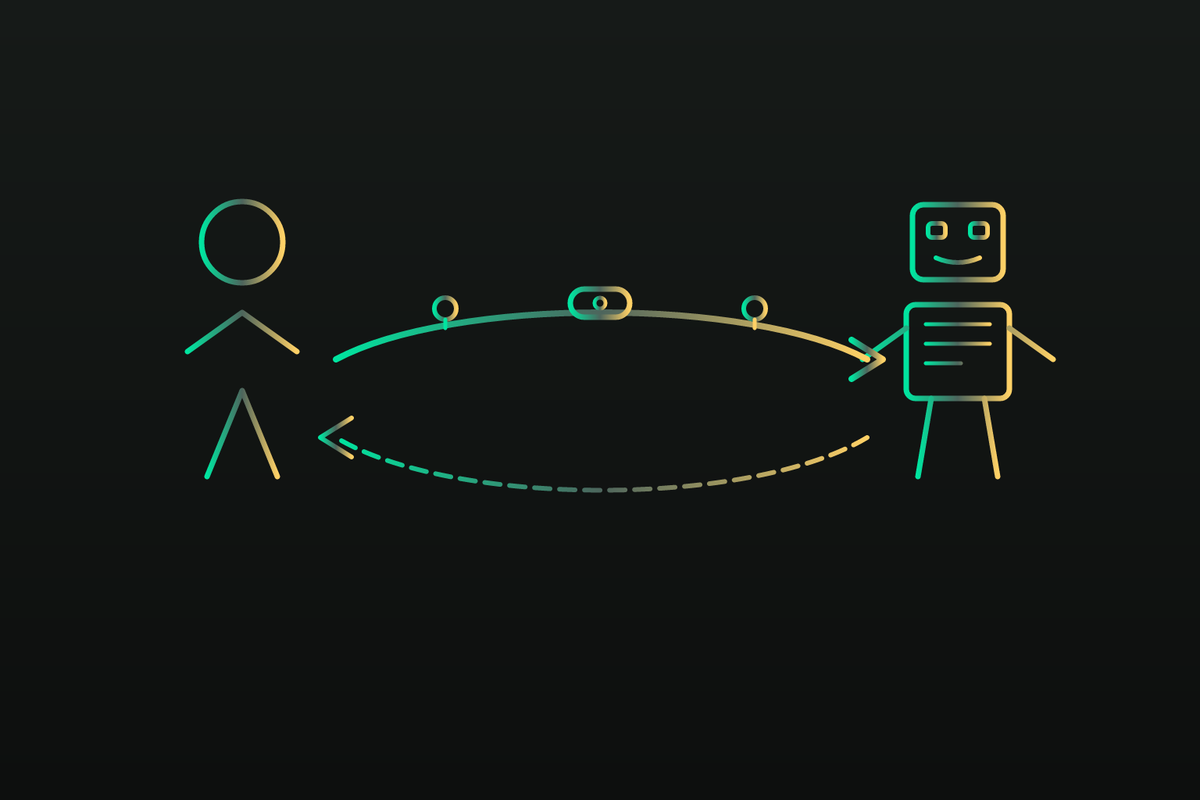
The CI platform runs the agent now, not the developer, and that's a bigger deal than it sounds. Nobody's sitting there hitting a key to kick things off. An event does that job instead, taking the form of a new issue, a label change, a PR comment, a cron schedule, or a webhook firing from some other system entirely.
Bug triage runs like this: someone labels an issue, the agent reads the stack trace, traces it back to the responsible code path, writes a fix plus a test, and opens a PR that references the original issue.
Dependency updates get scheduled, not requested. An agent runs a package audit, bumps minor and patch versions, runs the full test suite, and opens a PR with a changelog attached. It's a step up from the old Dependabot-style bot spam because the agent can batch related updates, tell what's actually a breaking change, and skip packages with a known history of causing problems.
Documentation catches up on its own now, too. Merge a PR that touches an API endpoint, and a triggered agent reads the diff, updates the docs, regenerates code samples, and opens a follow-up PR. "We'll update the docs later" stops being a thing teams say, mostly because it stops being a thing teams need to say.
Code review gets a first pass before a human ever opens the PR. The agent checks for security gaps, missing test coverage, and performance red flags, then leaves comments so the human reviewer spends limited attention on architecture and business logic instead of catching a missing null check.
None of this works without a fence around it, and the fence has to hold weight, not just look good. Sandboxed runners with scoped permissions stop an agent from pushing straight to main or grabbing secrets nobody handed it. Model Context Protocol, an open standard for connecting agents to outside systems, is the recommended way to hand an agent a narrow slice of access (read this one API, nothing else) instead of a blanket grant that covers everything and protects nothing.
Identity, permissions, and why personal developer tokens break at pipeline scale
Personal tokens are the wrong tool here, plain and simple, and teams that keep using them anyway are going to find out why the hard way. Run an AI CLI tool inside a pipeline, and it needs its own identity, something stable and traceable that isn't tied to whichever engineer generated a token last Tuesday. Personal tokens work fine for one person on one laptop. They fall apart the moment ten pipelines share a token sitting in someone's dotfiles, and nobody remembers whose it was or when it expires.
Augment Code introduced Service Accounts in November 2025 to close that gap: dedicated, non-human identities built specifically for CI/CD agent execution, available to enterprise customers and controlled by designated administrators. That turns token ownership from a tribal-knowledge problem into a structural one, which is exactly where it belongs.
The scale of the problem is bigger than it sounds, too. Augment Code's analysis across 8 enterprise deployments, spanning codebases north of 500,000 files, found that CI/CD integration fails outright for 73% of AI coding tools tested. Most of those tools were built for a single developer's individual workflow and never accounted for deployment topology or multi-repo coordination, which is exactly where pipeline-scale usage lives.
Permission scoping needs to match agent role, the same way it would for a new hire. A code review agent has no business holding deployment permissions. A security scanner doesn't need write access to anything, period, and if it has it, that's a design mistake waiting to become an incident. There's no single industry-wide number for how confident an agent needs to be before it acts, but common guidance suggests an optimal confidence threshold range of roughly 0.60 to 0.90 depending on the risk level of the action.
For headless execution, tools like Auggie CLI show the pattern clearly. A session token carried via an environment variable handles authentication for headless execution. Flags for suppressing interactive prompts and running a single instruction then exiting keep the tool clean enough to work inside a CI runner, a VM, or a container without modification.
CI can also pipe live context straight into the agent, a git diff, a chunk of test output, current deployment state, through standard Unix pipes. The agent works off what actually happened in this run instead of guessing from stale conversation history.
Jenkins deserves a mention here too. Its plugin ecosystem, over 1,800 strong, lets AI tools attach at nearly any stage of a pipeline. For teams stuck behind an air gap, locally-hosted inference stands in for a cloud API call without punching a hole in the security perimeter.
Spec validation and the Verifier gate: blocking merges when agent output drifts from the plan
Unit tests stop working as a safety net once the volume gets high enough. Here's the mechanism: when the same agent writes both the implementation and the tests for it, the tests inherit the exact same wrong assumption as the code. A test written by the thing being tested isn't an independent check, it's a self-assessment, the same mistake checking itself and nodding along.
Augment Code's documentation puts the failure mode plainly. A diff-level reviewer sees that the code compiles. A Verifier sees that the endpoint no longer enforces the validation contract it was supposed to. Those are two very different kinds of "passing," and only one of them actually matters, which means teams grading on the first one are grading the wrong test.
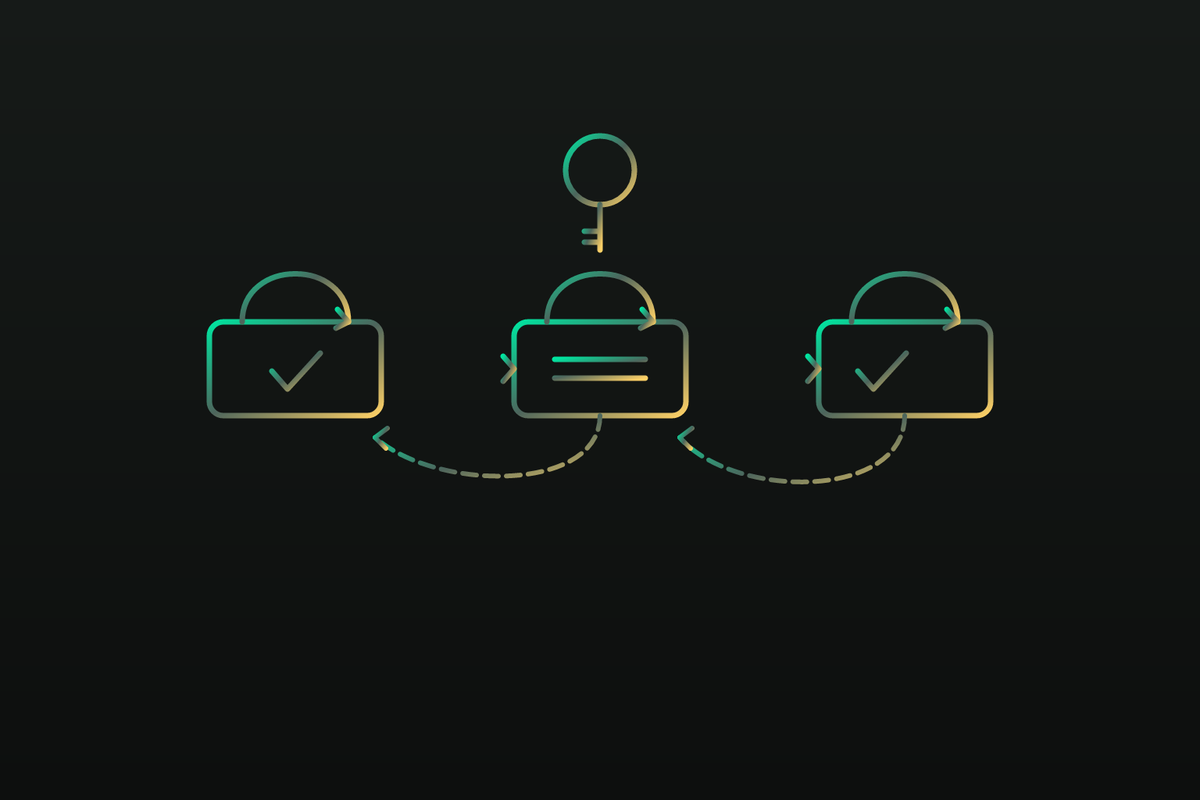
Spec validation treats this as a first-class stage in the pipeline, not a nice-to-have. A living spec layer gives the agent a shared source of truth before it writes a single line. A Verifier gate then runs in CI and blocks the merge outright if the output drifts from that spec, and the pipeline config watches spec files the same way it watches source: specs/ sitting right alongside src/.
Split the responsibilities and it gets clearer. Traditional CI still catches syntax errors, type mismatches, and known CVEs sitting in existing dependencies, the stuff it's always been good at. The spec and Verifier layer catches something different: behavioral contract violations, and hallucinated or nonexistent packages showing up in generated code. Augment Code's own numbers put commercial-model package hallucination at 5.2% or higher, a genuinely wild figure once you sit with what a phantom dependency does to a build.
Harness runs a parallel version of this idea with its evaluation agent pattern: break the task into single steps, with separate agents handling each component and quality checks between steps. Harness AgentTrace provides visibility into what happened during a run, and Harness has indicated it is open-sourcing foundational pieces of this, including harness-sdk and harness-evals.
What all of this actually guards against is the invisible failure: individual PRs that each pass CI cleanly, one after another, while the aggregate effect quietly eats through the latency or error-rate budget nobody was watching in real time. No single alarm goes off. The system just gets a little worse, then a little worse again, until someone notices the SLO's gone.
Evaluating non-deterministic outputs: why pass/fail gates need a pass-rate replacement
Run the same test against the same agent twice, and don't be shocked if it passes once and fails the next time. That's not a bug in the test suite, that's just what non-determinism looks like. A single-run pass or fail gate on that kind of output isn't a signal, it's noise wearing a signal's clothes, and treating it like a real gate is exactly how bad merges slip through.
The fix that's actually gaining ground: run key scenarios multiple times, gate on a pass rate instead of a single verdict, and let eval-linked scoring separate a real regression from ordinary variance. For decisions that matter, evaluation frameworks generally call for running key scenarios multiple times to accumulate enough signal before anything ships. A single run is rarely enough to distinguish a real regression from ordinary variance.
SWE-bench remains the most widely used benchmark for coding agents, testing whether an agent can resolve a real GitHub issue rather than just match a string of expected output. Worth flagging: OpenAI deprecated SWE-bench Verified, the variant most people actually used, in February 2026, citing contamination and flawed test cases, and pointed teams toward SWE-bench Pro instead. Apparently even the benchmarks need benchmarking.
On tooling, a few names keep coming up in real CI/CD setups. Inspect AI, DeepEval, and LangSmith get recommended for standardizing how teams build evaluation harnesses. A range of tools has emerged for tracing, experiment tracking, and regression checks in CI, with custom scorers for metrics specific to a given agent rounding out many setups. Other tools in this space offer deep trace visibility and pipeline monitoring. LangSmith, built by LangChain, works framework-agnostically despite the name and includes annotation queues so humans can weigh in on edge cases. Arize Phoenix stays vendor-neutral, runs on an open observability standard natively, and offers a free self-hosted option for teams that don't want another vendor contract.
For anything compliance-sensitive, teams need an audit trail showing exactly which data sources shaped which version of an agent. Skip that tracking, and a compliance audit turns into manual archaeology: digging through old logs trying to reconstruct what happened months back. That matters more by the year. Documented AI incidents climbed to 362 in 2025, up from 233 the year before, and the trend line alone makes the case that evaluation infrastructure isn't optional anymore.
Trust tiers and graduated autonomy: matching agent authority to the risk of the action

Autonomy isn't a light switch, it's a dial, and most teams have no business starting at either extreme. Full autonomy on day one is reckless. Pure assist mode forever wastes the whole point of having an agent in the first place, and teams that never move past it are basically paying for a very expensive autocomplete.
Four tiers cover most of what teams are actually running today. Assist mode has the agent suggest changes as comments only, while a human writes, reviews, and ships the code, the right call for complex features or anything touching security. Draft mode lets the agent open its own PRs while a human still reviews and merges, a good fit for bug fixes, dependency bumps, and documentation work. Auto-merge lets the agent open a PR and merge it itself as long as CI passes clean, with a human watching from the sidelines and stepping in only when something breaks, suited to low-risk changes like formatting or generated test scaffolding. Autonomous mode hands the agent the full lifecycle, with the team setting guardrails up front and reviewing after the fact rather than in the moment, appropriate for internal tools and non-production environments where the blast radius stays small.
Match the tier to the risk of the action, not to how impressive the agent looked in a demo. A demo doesn't have to survive a bad Tuesday in production. The pipeline does.